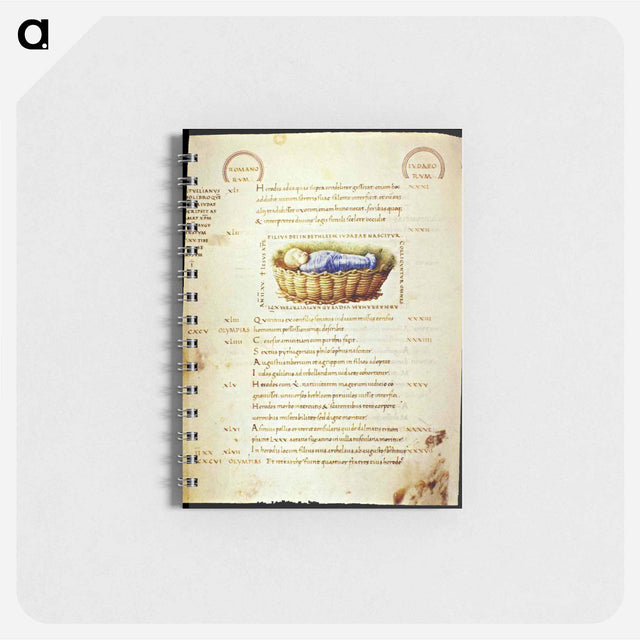
The Child Jesus in the manger - Andrea Mantegna Memo.
The Child Jesus in the manger - Andrea Mantegna Memo. - B6(128×182) is backordered and will ship as soon as it is back in stock.
【出荷予定について】
※土日祝定休
Product Description
Product Description
artgraph. Original masterpiece memo pad
Three features that make it a popular choice
1. Choose the size that best suits your needs
Available in B6 size, it is compact, easy to carry, and perfect for use as a memo pad.
2. Thick, smooth, high-quality paper
It uses high-quality paper that is stronger and thicker than regular notebooks. If you often write and refer back to it, like in an idea book, the bumps on the previous page won't stand out, making it easy to write on the next page.
3. A perfect gift for art-loving loved ones
The notebook section has no lines, so it's also recommended as a gift for art lovers who want to draw a little or carry a sketchbook with them!
It is printed on both sides so it can be opened either left or right.
*Due to misalignment of the printing area or changes to the trimming position, there may be missing parts in the print of the work.
- B6: 120 pages (60 sheets) / Silver ring color
| Work name | The Child Jesus in the Manger ) |
| Author name | Andrea Mantegna |
| Production date | 1450 |
| Related keywords | Andrea Mantegna, A-I, Italian Renaissance, 15th century, perspective, religious painting, fresco, sculptural art, notebook, ring notebook, memo, memo book, memo pad, ring memo, interior, stylish painting, painting, masterpiece, landscape, miscellaneous goods, vintage, retro, entryway, living room, dining room, bedroom, kitchen, bathroom, entrance, etc. Use it for yourself, or as a display reproduction for model rooms, offices, shops, hotels, cafes, etc. Also great as a gift for birthdays and other celebrations. |
| Related Keywords | |
| Management number | 1-8 |
We strive to make our product photos as close to the actual colors as possible, but the colors may differ from the actual product depending on your monitor settings and room lighting.
Each material may have different nuances, but we hope you enjoy the texture.
About delivery
About delivery
Please allow 3 business days for posters only and 10 business days for framed or canvas products.
Other products will take approximately 10 to 14 business days.
Business days: Monday to Friday Closed: Saturday, Sunday and public holidays
*Delivery may take longer than usual depending on the size, color, and quantity. If you are in a hurry or considering purchasing multiple items, please contact us in advance.
Refunds and Exchanges
Refunds and Exchanges
Refunds and Exchanges
If there is a problem with the product you received, please contact us immediately within 7 days of receiving it.
■ Contact details for returns and exchanges
info@artgraph.jp
refund
If there is a problem with the product, please see "Refunds and Exchanges" above.
cancel
Cancellation and refunds are possible before production has started, but if production has already ended, we will charge you the full amount.
Learn more

The Child Jesus in the manger - Andrea Mantegna Memo.
You can order with confidence.
Payment methods
Please be assured that artgraph. does not store any credit card information and has no access to your credit card information.

Andrea Mantegna
Andrea Mantegna
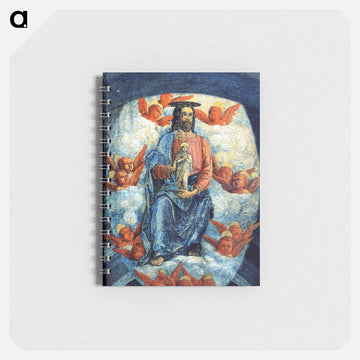
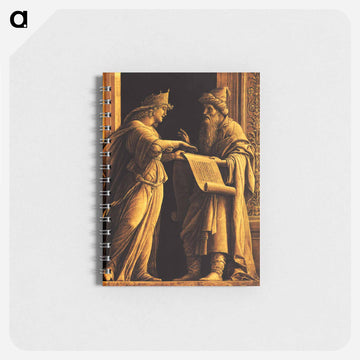
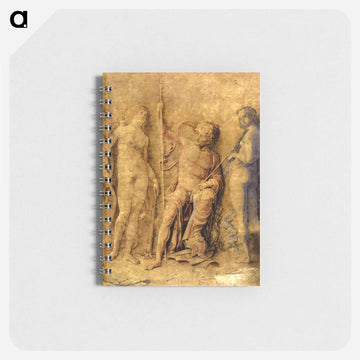
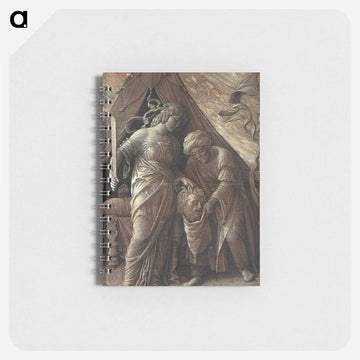
Andrea Mantegna is a representative painter of the 15th century Italian Renaissance, particularly of the Padua School. Known for his sculptural depictions of the human figure, strict perspective, and a style based on a deep knowledge of ancient Roman art, he brought innovation to early Renaissance painting.
Andrea Mantegna Biography
-
He was born around 1431 in Isola di Carturo (near present-day Piazzola sul Brenta) in the Republic of Venice.
-
Around 1442, he entered the workshop of the Padua painter Francesco Squarcione, becoming his apprentice and then his adopted son. In Squarcione's workshop, he came into contact with ancient Roman art and was deeply influenced by it.
-
In 1448, at the age of 17, he became independent and began the major project of painting the frescoes for the Ovetari Chapel in Padua (largely destroyed in World War II).
-
In 1453, he married Nicolosia Bellini, daughter of Jacopo Bellini, the founder of the Venetian school, and became brothers-in-law to Giovanni Bellini and Gentile Bellini.
-
In 1460, he was invited to become a court painter by Ludovico III Gonzaga, Marquis of Mantua, and moved to Mantua, where he served the Gonzaga family for the rest of his life.
-
Between 1465 and 1474 he created groundbreaking frescoes depicting the members of the Gonzaga family in the Camera degli Sposi (Marriage Hall) in the Doge's Palace in Mantua.
-
He died in Mantua on September 13, 1506 , at the age of 75.
Representative works
-
San Zeno Altarpiece (1556-59)
-
Ceiling and wall paintings in the Marriage Chamber (1465-74)
-
"Dead Christ" (c. 1480)
-
Parnassus (1497)
-
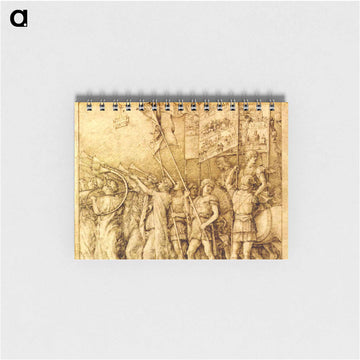
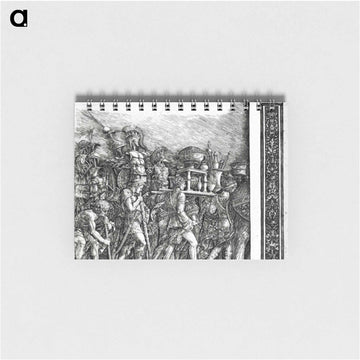
"The Triumph of Caesar" (c. 1480-95)
Mantegna's work is characterized by its rigid, sculptural depictions of figures, almost as if they were carved from marble. This reflects the tradition of the Padua School, in which he studied, and the influence of sculptors such as Donatello. He also frequently used bold compositions that made full use of foreshortening. In particular, in "Dead Christ," he depicts Christ's body from an extreme perspective, looking up from the feet, leaving a strong impression on the viewer.
Mantegna's profound knowledge of ancient Roman culture and art is at the core of his art, and his scholarship is evident in the themes and detailed decoration of his works. In "The Chamber of Consorts," which he created as court painter for the Gonzaga family, he used the trompe l'oeil technique to paint on the ceiling, creating the illusion that the ceiling had opened up to reveal a vast expanse of blue sky, an innovative attempt at spatial expression. His rigorous and powerful style had a major influence on northern artists such as his brother-in-law Giovanni Bellini and Albrecht Dürer.
















Related Products
-
Andrea Mantegna(アンドレア マンテーニャ)
The Child Jesus in the manger - Andrea Mantegna Poster.
Sale price From ¥1,800 Regular price ¥2,280Unit price /Unavailable -
-
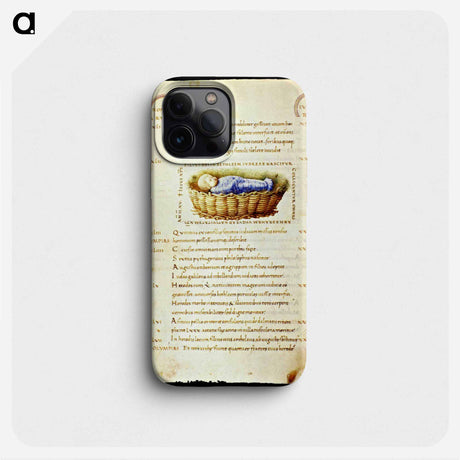
Andrea Mantegna(アンドレア マンテーニャ)
The Child Jesus in the manger - Andrea Mantegna Phone Case.
Sale price From ¥3,480 Regular price ¥4,280Unit price /Unavailable -

Andrea Mantegna(アンドレア マンテーニャ)
The Child Jesus in the manger - Andrea Mantegna Canvas.
Sale price From ¥6,800 Regular price ¥8,800Unit price /Unavailable -
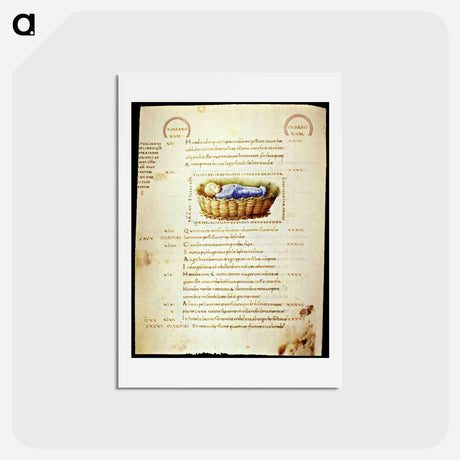
Andrea Mantegna(アンドレア マンテーニャ)
The Child Jesus in the manger - Andrea Mantegna Postcard.
Sale price From ¥780 Regular price ¥1,100Unit price /Unavailable


Until today's order deadline
Please note that if you exceed this time your order will be processed on the next business day.