Hello! I'm Matsumura, the manager of artgraph. With the theme of "Bringing art closer to you," we aim to help you deepen and enrich your art experience.
Have you ever wondered, "What was the atmosphere of the times that led Seurat and Signac to create the new technique of pointillism?" or "What was the era like for artists in late 19th century France?" Works of art are not just beautiful; they act as mirrors that reflect the spirit and social trends of the times in which they were created. In particular, innovative art such as Neo-Impressionism is deeply connected to the historical background of its time. I have personally experienced many times how unraveling history can significantly deepen my understanding of a work of art. 
In this article, we travel back in time to late 19th-century France, when the groundbreaking artistic movement known as Neo-Impressionism flourished. We explore how the dynamic historical context of the time, including remarkable advances in science and technology, rapid social change, and the emergence of new ideas, stimulated the creativity of Neo-Impressionist painters. Understanding the history will deepen your understanding of the works. Let's unravel the mystery of why Neo-Impressionist painting was born in that time and place.
Neo-Impressionist painters were truly children of their times. The innovative spirit and social atmosphere they infused into their works still amaze us, even more than 100 years later. At artgraph., we offer Neo-Impressionist masterpieces with such historical background as high-quality art posters and art panels . Why not hang one of these in your room and evoke memories of Paris at that time? Listening to the voices of the times as they speak to you is also a wonderful way to enjoy art.
The birth of Neo-Impressionism: The dynamics of Paris, France in the second half of the 19th century
The late 19th century, when Neo-Impressionism was born, was a time of great upheaval and change in France, and particularly in Paris. Various factors intertwined, creating the perfect fertile ground for the birth of new art.
The Industrial Revolution and the Wave of Urbanization: Changing Society and People's Lives
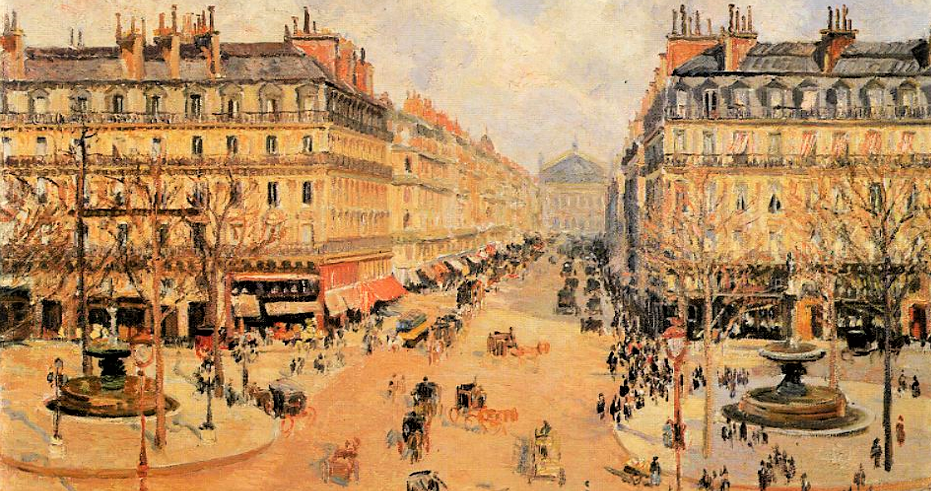
The Industrial Revolution, which swept across Europe throughout the 19th century, also brought about major changes in French society. With the invention of the steam engine, the development of railway networks, and the emergence of factories, populations increasingly concentrated in cities from the countryside, and Paris rapidly transformed into a modern metropolis. Georges Haussmann's major renovation of Paris (c. 1853-1870) also completely transformed the city's landscape. This urbanization also influenced people's lifestyles and values, providing new themes and perspectives for art.
The Light and Shadow of the Belle Époque: Scientism and Social Distortion
Paris, from the end of the 19th century until the eve of World War I, is remembered as the "Belle Époque" (the good old days), a time of cultural flourishing and optimism. World's Fairs were held frequently, and icons of new technology such as the Eiffel Tower (1889) appeared. Remarkable advances in science and technology gave people hope for the future. However, rapid industrialization widened the gap between rich and poor, and there were also dark sides, such as labor issues and social unrest. This perception of the era, with its mixture of light and dark, also influenced the creative activities of artists.
A period of change in art: from Academism to Impressionism and new forms of expression
For a long time, Academism (the National Academy of Fine Arts) held authority in the French art world during the 19th century, but its stronghold began to crumble with the rise of Realism and then Impressionism in the 1870s. The Impressionists made innovative attempts that overturned the conventional wisdom of painting, such as creating works outdoors and exploring the expression of light. Neo-Impressionism inherited the achievements of Impressionism, but was dissatisfied with its subjectivity and randomness, and was born out of a search for a more scientific and theoretical approach.
The development of science and technology and Neo-Impressionism: a close relationship with optics and color science
The pointillism technique, which is the most distinctive feature of Neo-Impressionism, is deeply connected to the developments in science and technology at the time, particularly in optics and color science.

Influence of the color theories of Chevreul and Rude
Neo-Impressionist painters, particularly Georges Seurat, diligently studied scientific works such as chemist Michel-Eugène Chevreul's Laws of Simultaneous Contrast of Colours and physicist Ogden Rood's Modern Colour Theory. These theories clarified phenomena such as the mutual influence of adjacent colours (such as complementary colour contrast) and the principle of "additive colour mixing", which produces a brighter colour when different colours of light are mixed. Seurat and his colleagues sought to apply these scientific findings to painting.
Scientific color theory keywords
- Complementary color contrast: When colors that are opposite each other on the color wheel (e.g. red and green) are placed next to each other, they appear more vivid.
- Optical mixture: When small dots of different colors are placed side by side, the colors appear to mix on the viewer's retina. This is said to produce a higher saturation than mixing paints.
These theories became the basis for the pointillist technique.
The emergence of photography and the changing role of painting
Photography was invented and rapidly spread in the 19th century. In its role of faithfully reproducing reality, photography became a powerful rival to painting. This, in turn, was one of the factors that led painting to move away from mere imitation of reality and to pursue its own unique forms of expression, such as color, form, and composition. The efforts of Neo-Impressionism can be placed within this trend.
Scientific interest in "seeing with the eyes" and the theory of visual blending
At the time, the scientific community was becoming increasingly interested in the act of "vision." Research was progressing on how the human eye perceives color and shape, and how light works. The "visual blending" that Neo-Impressionist painters aimed for focused on the scientific aspects of the act of "seeing" with their eyes, and was an attempt to make paintings more objective and universal. 
Changing social structures and artists' perspectives
Changes in French society in the second half of the 19th century influenced the creative activities and the themes of artists' works.
The rise of the bourgeoisie and the emergence of a new class of patrons
With the Industrial Revolution, the bourgeoisie (middle class), centered around merchants and industrialists, gained economic power and increased their social influence. They became supporters and patrons of new art, replacing the traditional aristocracy and the church as the backbone of the art market. This allowed artists to more freely pursue themes and expressions.
The birth of leisure time and new landscapes of urban life (parks, cafes, circuses, etc.)
Urbanization and the (slight) improvement in working conditions brought new leisure time to some people. New scenes emerged in urban life, such as strolls in parks, conversations in cafes, and entertainment at circuses and dance halls. These scenes became attractive subjects for Impressionist and Neo-Impressionist painters. Seurat's "A Sunday Afternoon on the Island of La Grande Jatte" depicts exactly how Parisians spent their leisure time at the time.

A focus on the working class and the beginnings of social consciousness (a tendency seen in the works of some artists)
On the other hand, urbanization and industrialization also brought about social problems such as harsh working conditions and poverty. Some artists turned their attention to these social realities and began to depict the lives and appearances of working-class people. For example, the Neo-Impressionist painter Maximilien Luce left behind works that focused on factory workers.
Inheritance and Innovation from Impressionism: How Neo-Impressionism Was Born
Neo-Impressionism built on the achievements of Impressionism, but went a step further to establish its own unique style of expression.
"Light" and "Sensation" Captured by the Impressionists

Impressionist painters attempted to capture the fleeting impression of light and the artist's subjective feelings on canvas with short, rapid strokes. This was a major departure from traditional academic painting. Neo-Impressionists also recognized the importance of light and color, but in a different way.
Aiming to break away from the subjectivity and randomness of impressionism
Neo-Impressionist painters felt that Impressionist paintings were limited in some way by their dependence on the individual artist's senses and the coincidences of the moment. They aimed to create paintings that were based on more permanent and universal beauty and objective laws.
Seurat's Introduction of "Law" and "Order": The Logic of Pointillism
Georges Seurat attempted to bring "law" and "order" to his paintings by applying scientific color theory to his paintings. His pointillism technique was not simply a matter of style; it was based on extremely logical thinking, reducing colors to their pure elements and visually integrating them through calculated placement. This resulted in a tranquil, architectural beauty that differed from the momentary brilliance of Impressionism. 
The ideological trends of the time and the resonance of Neo-Impressionism
Neo-Impressionist art was not unrelated to the ideological movements of the time.
Positivist thinking and scientific approach
The 19th century was a time when positivism, advocated by Auguste Comte and others, became widespread. This was the idea that reliable knowledge could only be obtained through scientific methods such as observation and experimentation, and influenced academia and society at large at the time. The attitude of Neo-Impressionist painters, who scientifically analyzed phenomena such as color and vision and attempted to apply this knowledge to painting, resonated with the positivist spirit of the era.
Connection with anarchist ideas (a tendency seen in Signac and some other painters)
Some Neo-Impressionist painters, particularly Paul Signac and Camille Pissarro (who joined the movement briefly), are known to have sympathized with the ideas of anarchism. For them, the desire for a free society unfettered by traditional authority and institutions may have been linked in some way to the creation of new art free from the norms of academicism. While their works rarely contain direct political messages, their ideological background can sometimes be glimpsed in their creative attitudes and social concerns.

A Mirror of the Times: Late 19th-Century Paris as Seen in Neo-Impressionist Works
Neo-Impressionist works truly reflect the Paris of the late 19th century. For example, Seurat's "A Sunday Afternoon on the Island of La Grande Jatte" depicts people from various classes enjoying their new leisure time, giving us a glimpse into the lives of Parisians at the time. Meanwhile, works such as Signac's "The Port of Marseille" convey the energy of a vibrant port city and the progress of modernization.
When viewing these works, you will be able to gain a deeper appreciation and understanding not just by looking at them as beautiful landscapes or portraits, but also by thinking about the atmosphere of the times in which they were created, and what the artists saw and felt.
Find works that capture the atmosphere of this era on artgraph.
Summary: Neo-Impressionist art becomes even more interesting if you know the historical background!
We hope that you have been able to get a glimpse of how the revolutionary art movement known as Neo-Impressionism was born and nurtured in the unique historical context of France in the second half of the 19th century.
The development of science and technology, changes in social structure, the rise of new ideas, and the influence of the preceding Impressionist movement—these various elements intertwined in a complex way, and in the hands of talented painters such as Georges Seurat and Paul Signac, they crystallized into the unique style of Pointillism.
When appreciating Neo-Impressionist works, it's not just the beautiful colors and meticulous brushwork that make art more interesting and accessible. Trying to capture the spirit of the era in which the work was created makes it even more captivating and accessible. At artgraph., we offer a wide selection of Neo-Impressionist art posters and panels that evoke the romance of history. Find your favorite piece and evoke the Paris of the late 19th century in the comfort of your own home. Through these works, you'll be able to experience the passion and spirit of inquiry of artists from a distant era. You can also enjoy their worldview through everyday items like smartphone cases , memo pads , and postcards .
View Neo-Impressionist works on artgraph.