


Am Bahnhof Friedrichstraße - Lesser Yury Phone Case.
Am Bahnhof Friedrichstraße - Lesser Yury Phone Case. - iPhone 17 is backordered and will ship as soon as it is back in stock.
【出荷予定について】
※土日祝定休
Product Description
Product Description
artgraph. Original smartphone case featuring famous paintings
●Designed with attention to detail
This is a smartphone case with full-print details, including the sides and around the camera. The composition is adjusted for each model so that the art stands out.
*The product image is a centered sample. The crop position of the original image will vary depending on the aspect ratio of the device, so please contact us in advance if you have any concerns.
*Although some parts are not printed on the entire surface, the printing position will be adjusted by hand when delivered.
*Due to misalignment of the printing range or changes to the cropping position, there may be loss of the outer image.
●Elegant finish
The matte texture with no gloss gives it a sophisticated and chic impression, and it feels smooth and comfortable in your hand.
●Safe even if dropped
Made from impact-resistant polycarbonate material, it is lightweight and slim, yet provides excellent protection for your precious smartphone.
*There are no covers on the top and bottom sides, allowing you to easily insert charging cables, earphones, etc.
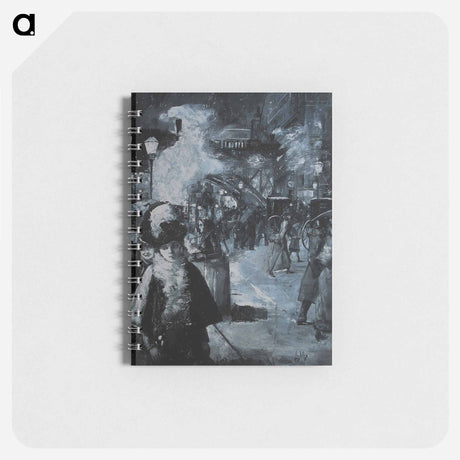
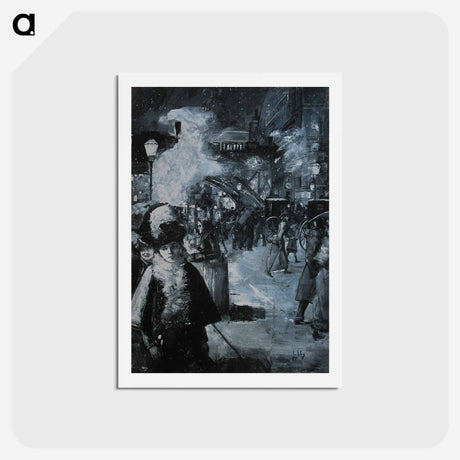
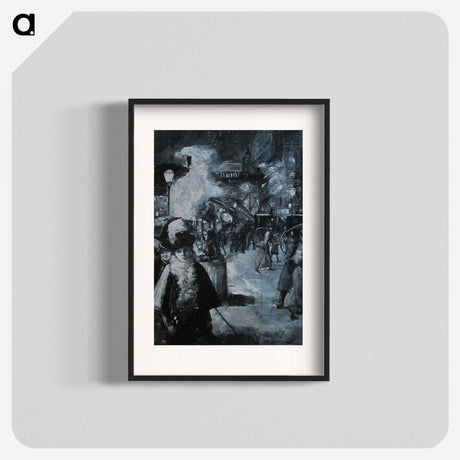
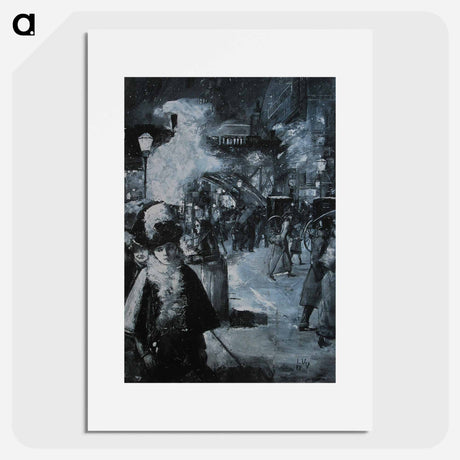
| Work name | Am Bahnhof Friedrichstraße (Friedrichstraße Station) ) |
| Author name | Leo Lesser Ury |
| Production date | 1888 |
| Related Keywords | This Lesser Lily, a German Impressionist design, features a 19th-century, 20th-century cityscape, nightscape, and art design. This smartphone case is compatible with Xperia, AQUOS, and Galaxy iPhones, including iPhone 16, iPhone 15, iPhone 14, iPhone 13, 12, Pro, mini, and iPhone 11, as well as iPhone SE (4th, 3rd, and 2nd generations). It's perfect for interior decor, living rooms, dining rooms, bedrooms, kitchens, bathrooms, and more. Perfect for personal use, or as a display reproduction in a model room, office, shop, hotel, or cafe. It also makes a great gift for birthdays and other special occasions. |
| Related Keywords | |
| Management number | 1-3 |
We strive to make our product photos as close to the actual colors as possible, but the colors may differ from the actual product depending on your monitor settings and room lighting.
Each material may have different nuances, but we hope you enjoy the texture.
About delivery
About delivery
Please allow 3 business days for posters only and 10 business days for framed or canvas products.
Other products will take approximately 10 to 14 business days.
Business days: Monday to Friday Closed: Saturday, Sunday and public holidays
*Delivery may take longer than usual depending on the size, color, and quantity. If you are in a hurry or considering purchasing multiple items, please contact us in advance.
Refunds and Exchanges
Refunds and Exchanges
Refunds and Exchanges
If there is a problem with the product you received, please contact us immediately within 7 days of receiving it.
■ Contact details for returns and exchanges
info@artgraph.jp
refund
If there is a problem with the product, please see "Refunds and Exchanges" above.
cancel
Cancellation and refunds are possible before production has started, but if production has already ended, we will charge you the full amount.
Learn more

Am Bahnhof Friedrichstraße - Lesser Yury Phone Case.
You can order with confidence.
Payment methods
Please be assured that artgraph. does not store any credit card information and has no access to your credit card information.
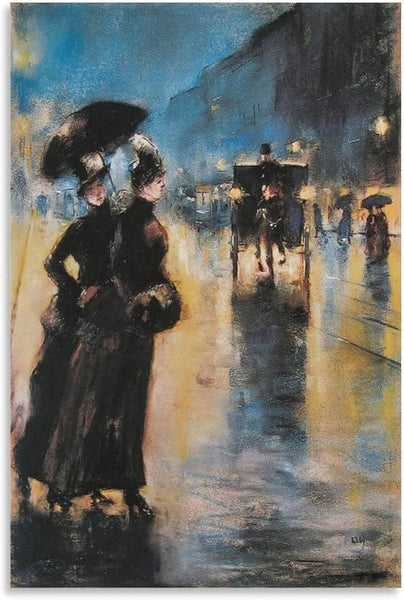
Leo Lesser Ury
Juri Lesser was a German impressionist painter and printmaker active from the late 19th century to the early 20th century. He is particularly known for his poetic portrayals of urban scenes, such as Berlin cityscapes, rainy days, twilight scenes, and nighttime cafes, skillfully capturing the effects of light. Also known as the "painter of Berlin," his works possess a unique atmosphere and sense of color, reflecting the hustle and bustle and loneliness of urban life at the time.
Lesser Yuri Biography
- He was born on November 7, 1861, in Birnbaum, Posen province, Kingdom of Prussia (now Miedźchúd, Poland) to a Jewish family.
- Around 1872, he moved to Berlin with his family.
- In 1879, he enrolled in the Düsseldorf Art Academy and began studying painting. He then continued his training in various parts of Europe, including Brussels, Paris, Stuttgart, and Munich. In Paris, he studied under Jean-François Raffaelli and Gustave Boulanger, and was influenced by the Impressionists.
- He returned to Berlin in 1887 and continued to work there. At first he painted traditional subjects, but gradually he began to focus on urban landscapes, especially Berlin's street corners, cafes, and night views.
- In 1893, he participated in the exhibition of the Society of Eleven, which included Max Liebermann.
- In the early 1900s, he exhibited at exhibitions of the Berlin Secession, but due to his difficult personality he maintained a certain distance from the mainstream art world.
- Although he enjoyed some recognition during his lifetime, he never achieved the widespread fame of his contemporary, Max Liebermann.
- In 1921 he became a member of the Berlin Academy of Fine Arts.
- He died in Berlin on October 18, 1931, at the age of 69. After his death, although his works were not deemed "degenerate" under the Nazi regime, because he was a Jewish painter, they disappeared from public view, and many of them were scattered or destroyed.
Representative works
- Berlin Street in Rain (prolific production, especially in the 1920s)
- "Unter den Linden" (many works)
- Potsdamer Platz by Night (1920s)
- "Im Café Bauer" (Many produced, especially from the late 1880s to the early 1900s)
- Jerusalem (series of biblical landscapes, 1920s)
- "Self-Portrait" (many produced)
The Art of Lesser Yuri
While a part of German Impressionism, Lesser Jurij's art is characterized by his own unique poetic sentiment and urban sensibility. He preferred to paint the landscapes and atmospheres of modern cities, such as the hustle and bustle of the metropolis of Berlin, the gleam of rain-soaked streets, the nightscapes woven by gas lamps and car headlights, and the bustle of bustling cafes. While his brushstrokes are sometimes quick and show the Impressionist trait of attempting to capture fleeting impressions of light and color, he also exhibits a more subjective and emotional approach to his subjects.
He particularly explored the effects of light under specific weather conditions, such as rain, fog, and twilight, creating melancholic and poetic scenes. His "Rain in Berlin" series is his most famous theme, depicting light reflected on wet roads and people passing by under umbrellas with a unique sense of color. He excelled in both oil and pastel, and the soft texture of these works contributed to enhancing the atmosphere of his works. In his later years, he also painted biblical scenes and landscapes of his hometown, but his most acclaimed works are his cityscapes of Berlin. His works capture the atmosphere of Berlin from the end of the century to the Weimar Republic period, alluding to the loneliness and transience of people living in modern cities.
Lesser Yuri's influence and later recognition
Although Lesser Jurij was highly regarded by art lovers and critics in Berlin during his lifetime, he never achieved the leading position or widespread fame of his contemporaries, especially Max Liebermann. This is said to have been due in part to his difficult personality and tendency to isolate himself.
After his death, with the rise of Nazi Germany, Jurij, who was Jewish, suffered the tragic fate of having his works removed from public collections, exported overseas, or even destroyed, which meant that his name was temporarily forgotten in art history.
However, after World War II, especially since the 1970s, Jury Lesser's art has been rediscovered and reevaluated. His Berlin scenes have come to be recognized as evoking memories of a lost city and as important examples of the diversity of Impressionism. Today, Jury Lesser is internationally acclaimed as a painter who established a unique position within German Impressionism and for his poetic portrayal of urban life in Berlin in the early 20th century. Keywords such as "German Impressionism," "Berlin streetscapes," "night scenes," "rain scenes," "light effects," and "pastel paintings" are important elements in understanding Jury's art. His works are housed in museums throughout Germany and around the world and continue to fascinate many.








Related Products
-
Leo Lesser Ury(レッサー ユリィ)
Am Bahnhof Friedrichstraße - Lesser Yury Poster.
Sale price From ¥1,800 Regular price ¥2,280Unit price /Unavailable -
-
Leo Lesser Ury(レッサー ユリィ)
Am Bahnhof Friedrichstraße - Lesser Juri Memo.
Sale price ¥2,800 Regular price ¥3,480Unit price /Unavailable -
Leo Lesser Ury(レッサー ユリィ)
Am Bahnhof Friedrichstraße - Lesser Yury Postcard.
Sale price From ¥780 Regular price ¥1,100Unit price /Unavailable
Until today's order deadline
Please note that if you exceed this time your order will be processed on the next business day.
