


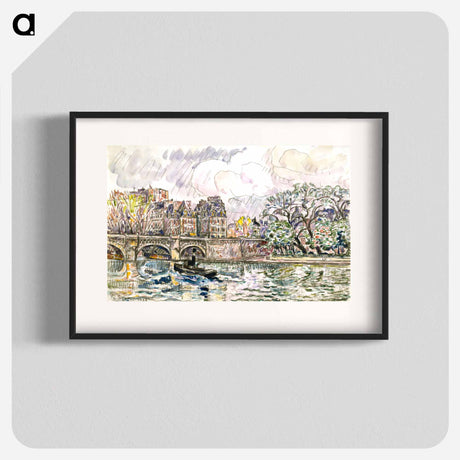
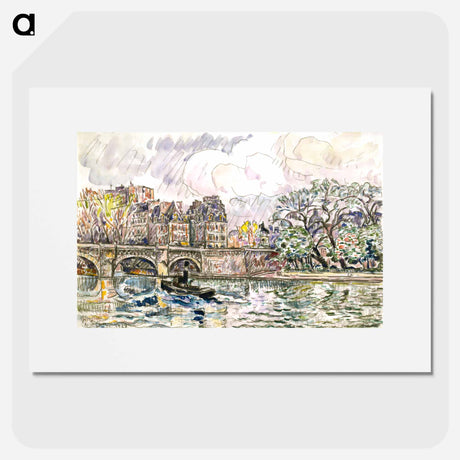
Paris: Le Place Dauphine - Paul Signac Postcard.
Paris: Le Place Dauphine - Paul Signac Postcard. - L(89×127) / Print only / none is backordered and will ship as soon as it is back in stock.
【出荷予定について】
※土日祝定休
製品説明
製品説明
I want to casually decorate with art
In response to such requests, artgraph.'s "Mini Art" postcard series was created.
It's small and light, so you can display it anywhere and change it according to the season.
You can easily incorporate art into your life just like decorating with flowers.
Choose your favorite piece from our wide selection of works
We have hundreds of artworks available, from elegant modern pieces to emotional abstract paintings.
Choose your favorite piece to suit the occasion, such as the taste of your interior, a style that the recipient might like if you are giving it as a gift, or a piece that is appropriate for the season.
Specially selected art paper
We are particular about the paper we use, and we create our works with care to ensure that they have a pleasant texture when held in the hand.
It is often used for large-scale works and is of archival quality.
This highly acclaimed paper is luxuriously cut to postcard size.
The wooden stand makes it easy to display art
The set includes an L-shaped wooden stand that is perfect for your interior.
The warm wooden stand blends naturally into any room style, including natural, Nordic, modern, and Japanese.
The simple, understated design enhances the appeal of the artwork itself.
It's small and light, so you can easily display it in a small space such as the living room, entrance, bedroom, study, or bathroom. Another great thing about it is that you can change the location to suit your mood.
*The back does not have any stamp guide lines or an area for writing the postal code printed on it, and is finished in pure white.
*If there is margin, it will be generated depending on the aspect ratio of the work.
*If there are no margins, the work will be trimmed to fit the paper size.
*The photos are not shipped in a photo stand as they may shift during shipping.
| Print size | 100 x 148 mm (postcard size) / 89 x 127 mm (L size) |
| Stand body size | H185mm×W152mm×D40mm |
| Work name | Paris: Le Place Dauphine |
| Author name | Paul Signac |
| Production date | 1928 |
| Related keywords | Paul Signac, Paris, Square, Signac, France, Watercolor, Ship, Watercolor City, Paris Painting, Paris-le-Place, Illustration, Paris Impressionism, Paul Signac, Paul Signac, French, Neo-Impressionism, Pointillism, 19th Century, 20th Century, Art, Postcard, Miniature Art, Postcard, Interior, Stylish, Painting, Picture, Postcard, Masterpiece, Landscape, Landscape, Miscellaneous Goods, Vintage, Retro, Entryway, Living Room, Dining Room, Bedroom, Kitchen, Bathroom, Entrance, etc., For your own personal use, or as a display reproduction for a model room, office, shop, hotel, cafe, etc. Also great for birthdays and other celebrations, or as a gift. |
| Related Keywords | paul signac, paris, square, signac, france, watercolor, ship, watercolor city, paris painting, paris le place, illustration, paris impressionisms |
| Management number | 1-32 |
商品写真はできる限り実物の色に近づけるよう徹底しておりますが、 お使いのモニター設定、お部屋の照明等により実際の商品と色味が異なる場合がございます。
お届けについて
お届けについて
出荷までの期間はポスターのみは3営業日、額装込み・キャンバス製品は10営業日程度いただいております。
それ以外の製品は10〜14営業日程度いただいております。
営業日:月〜金曜
定休日 : 土・日曜日・祝日
※サイズ・色・点数によってお届けに通常より長くお時間をいただく場合がございます。お急ぎの場合や複数点数のご購入をご検討の場合は事前にお問い合わせください。
返金交換について
返金交換について
返金・交換に関して
到着した製品に不具合がございましたら到着より7日以内に速やかにご連絡ください。
■返品・交換などの連絡先
info@artgraph.jp
返金
商品に不具合が有った場合は上記「返金・交換」をご覧下さい。
キャンセル
生産開始前であればキャンセル・返金可能ですが、生産が終了している場合は全額ご請求とさせていただきます
詳しくはこちら

Paris: Le Place Dauphine - Paul Signac Postcard.
安心してご注文いただけます。
Payment methods
artgraph.では運営側でクレジットカード情報を保存せず、お客様のクレジットカード情報にアクセスすることはできませんので安心してご利用ください。
美術館品質の印刷で名作をご自宅に
15年以上写真やアート、名画のポスターを印刷してきた印刷事務所が運営しています。
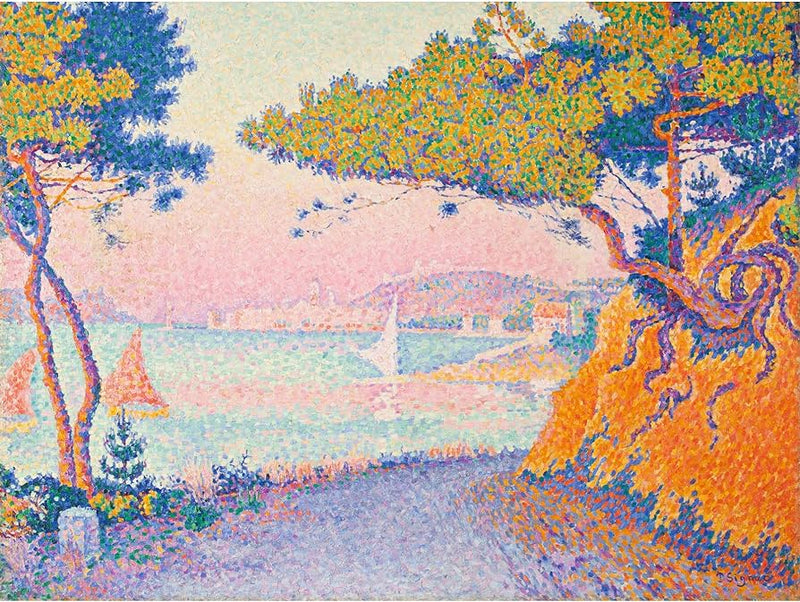
Paul Signac
Explorer of light and color: Paul Signac
Paul Signac (1863-1935) was a painter active in France from the late 19th century to the early 20th century, and an important representative of Neo-Impressionism . Together with his friend Georges Seurat, he developed the Pointillism technique , pursuing the expression of vivid colors and light based on scientific color theory. His works, with their bright colors and meticulous calculations, continue to surprise and move viewers with fresh ideas.
The Biography of Paul Signac: From his encounter with color theory to the leader of Neo-Impressionism
What kind of life did Paul Signac , who pioneered the world of rich color, lead? Let's trace his career.
- 1863: Born in Paris to a wealthy family.
- 1880: Although he aspired to be an architect, he was inspired by an exhibition of Claude Monet's works and began his career as a painter. In his early years, he produced works in a style influenced by Impressionism.
- 1884: He had a fateful encounter with Georges Seurat. He was deeply impressed by Seurat's scientific color theory and his new technique of applying paint in dots, and became deeply devoted to him. In the same year, Paul Signac , together with Seurat and Odilon Redon, helped to establish the Salon Indépendants (Exhibition of the Society of Independent Artists), an unjuridical, free exhibition.
- 1886: He participated in the 8th (and final) Impressionist Exhibition alongside Seurat and Camille Pissarro, and presented a series of Neo-Impressionist works. This attracted a great deal of attention, and he began to use pointillism in his work.
- 1891: Seurat, his close friend, suddenly dies at the young age of 31. Paul Signac is deeply saddened, but decides to carry on Seurat's legacy and take on the role of theoretical leader of the Neo-Impressionist movement.
- After 1892: An avid sailor, Signac energetically sailed his yacht to ports around France and the Mediterranean coast. He produced many landscapes, full of bright light and color, that he saw on his travels. He particularly loved the port city of Saint-Tropez in southern France, and its landscapes became his signature motif.
- 1908–1935: He served as president of the Salon des Indépendants for many years, encouraging and supporting young artists such as Henri Matisse and André Derain. His color theory and practice had a major influence on later Fauvist painters.
- 1935: Died of sepsis in Paris at the age of 71.
Pointillism and Color Division: Paul Signac's Innovative Techniques
Essential to understanding Paul Signac 's work is his innovative techniques of pointillism and color division .
- Pointillism: Rather than mixing paints on a palette, pointillism involves precisely arranging tiny dots (called "points" in French) of pure color on a canvas. These colors are believed to blend in the viewer's eye (retina), creating a much brighter and more vibrant color effect than mixing on a palette.
- Color Divisionism: Based on optics and color theory (particularly the law of complementary colors) by Michel-Eugène Chevreul and others, this approach attempts to scientifically reproduce the effects of light and the mutual influence of colors. For example, by placing a dot of its complementary color, blue-purple, next to a yellow dot, the artist aimed to make each color appear more vivid. This resulted in a vibrant harmony of light and brilliance throughout the entire painting.
Paul Signac , together with Seurat, developed the Neo-Impressionist technique in both theory and practice. Particularly in landscape painting, he brilliantly portrayed scenes filled with light, such as the strong sunlight of the south of France and the sparkling water surface. His work can be considered an important step in art, as it attempted to express the fleeting impressions of light that the Impressionists sought to capture, based on a more systematic and scientific theory.
Paul Signac 's style changed throughout his career, moving from the highly detailed pointillism of his early years to larger, more organized squares (almost like a mosaic) in his later years, but he continued to explore the possibilities of color throughout his life.
Paul Signac's Masterpieces: Masterpieces of Light and Color
Paul Signac left behind many masterpieces, particularly those depicting harbors, yachts, and coastal landscapes. Here we introduce some of his most representative works.
-
"Breakfast (Dining Room)" (Le petit déjeuner / The Dining Room) (1886-87, Kröller-Müller Museum, Netherlands)
This is a representative work of interior painting from the early days of Neo-Impressionism . The everyday life of a family is depicted with a unique atmosphere that is both tranquil and filled with light, using strict pointillism and color division ."Breakfast (Dining Room)" (1886-87) -
The Port of Saint-Tropez (Le Port de Saint-Tropez / The Port of Saint-Tropez) (multiple works produced from around 1892)
This series, which is synonymous with Paul Signac , depicts his beloved southern French port town of Saint-Tropez. The dazzling sun, blue sea, and colorful sailing ships are vividly depicted through rhythmic pointillism. (Collection of Hiroshima Museum of Art, etc.)The Port of Saint-Tropez (1892) -
The Papal Palace, Avignon (1900, Musée d'Orsay, Paris)
This masterpiece depicts the magnificent Palais des Papes in Avignon, seen across the Rhône River, in a vibrant harmony of colors. The complex light reflections in the sky and water are beautifully captured through skillful color division .The Papacy at Avignon (1900) -
Port of Concarneau (1925, Metropolitan Museum of Art, New York)
This work shows the style of Paul Signac in his later years. The pointillist touches are larger, creating a compositional picture reminiscent of a mosaic. The bustle of a Brittany port is expressed with powerful brushstrokes and a calculated color arrangement.The Port of Concarneau (1925)
*There may be various theories regarding the title of the work, the year of production, and the museum where it is housed. In addition to the works listed here, Paul Signac has many other wonderful works.
The influence on future generations and the appeal of Paul Signac
Paul Signac was not just a painter, but also a great pioneer of Neo-Impressionism and a supporter of its successors. After the early death of Georges Seurat, he defended the theory of Neo-Impressionism and dedicated his life to its development. His book, From Eugène Delacroix to Neo-Impressionism (1899), became an important document linking color theory and artistic theory, providing guidance to subsequent generations of artists.
In particular, Henri Matisse and other Fauvist painters were deeply inspired by Paul Signac 's bold and free use of color. The Salon des Indépendants, which Signac chaired, became an important venue for presenting new art and helped open the door to 20th century art.
The appeal of Paul Signac 's work lies in the exquisite fusion of precision backed by scientific theory with the artist's rich sensibilities, such as the sunlight of the south of France, the sparkling sea, and his boundless passion for travel. His works, known worldwide as Paul Signac , continue to capture our hearts and fascinate many people today with their bright colors and light.
Even in Japan, you can see Paul Signac 's precious works at places like Hiroshima Museum of Art. Why not experience the real thing and experience the world of Neo-Impressionism , woven with vibrant colors and light?
Recommend

Antibes - Paul Signac Poster.

Golfe Juan - Paul Signac Poster.

Golfe Juan - Paul Signac Postcard.

Golfe Juan - Paul Signac Canvas.

River scene: Rouen - Paul Signac Poster.

Camille Pissarro - Paul Signac Postcard.

Boats at Flushing - Paul Signac Postcard.

Landscape - Paul Signac Postcard.

View of the port of Boulogne-sur-Mer - Paul Signac Postcard.

Two fishing vessels off the entrance to Granville harbor - Paul Signac Postcard.

Camille Pissarro - Paul Signac Postcard.

Genève - Paul Signac Postcard.

La Reine Fiammette - Paul Signac Postcard.

Harbor in Holland–Flushing - Paul Signac Postcard.

St. Tropez: The Port - Paul Signac Postcard.

St. Julien-Beauchene - Paul Signac Postcard.

The Wreckers - Paul Signac Postcard.

The port of Saint-Tropez with the destroyer Midi de la France - Paul Signac Postcard.

The Flooded Seine - Paul Signac Postcard.

La Rochelle - Paul Signac Postcard.

Evening - Paul Signac Postcard.

Seated Nude Woman - Paul Signac Postcard.

The bell tower in Viviers - Paul Signac Postcard.

Beach Scene with Two Trees - Paul Signac Postcard.

Venice - Paul Signac Postcard.

Rotterdam - Paul Signac Postcard.

The Port of St. Tropez - Paul Signac Postcard.

St. Tropez - Paul Signac Postcard.

Les Andelys on a Summer Morning - Paul Signac Postcard.

La Rochelle - Paul Signac Postcard.

Le Pont des Arts - Paul Signac Postcard.

The Gas Tanks at Clichy - Paul Signac Postcard.

Still Life with Jug - Paul Signac Postcard.

Woman at the Window: Initial Conception for the painting "Sunday" - Paul Signac Postcard.

Boats at Flushing - Paul Signac Postcard.

In Holland–The Buoy – Paul Signac Postcard.

The Grenelle bridge - Paul Signac Postcard.

Rouen - Paul Signac Postcard.

Le Pont des Arts - Paul Signac Postcard.

St. Tropez - Paul Signac Postcard.

The Town Beach, Collioure, Opus 165 - Paul Signac Postcard.

At Flushing (A Flessingue) - Paul Signac Postcard.

The Dining Room - Paul Signac Postcard.

Marseille - Paul Signac Postcard.

Concarneau - Paul Signac Postcard.

La Rochelle - Paul Signac Postcard.

Village Festival - Paul Signac Postcard.

La Rochelle - Paul Signac Postcard.

Evening, The Jetty at Vlissingen - Paul Signac Postcard.

Quilleboeuf - Paul Signac Postcard.
同じ作品を使用したアイテム
-
Paul Signac(ポール シニャック)
Paris: Le Place Dauphine - Paul Signac Poster.
Sale price From ¥1,800 Regular price ¥2,280Unit price /Unavailable -
-
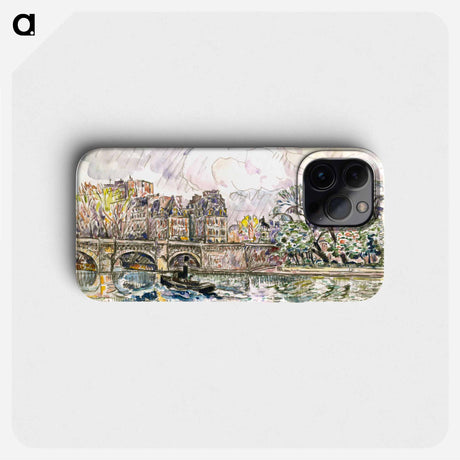
Paul Signac(ポール シニャック)
Paris: Le Place Dauphine - Paul Signac Phone Case.
Sale price From ¥3,480 Regular price ¥4,280Unit price /Unavailable -
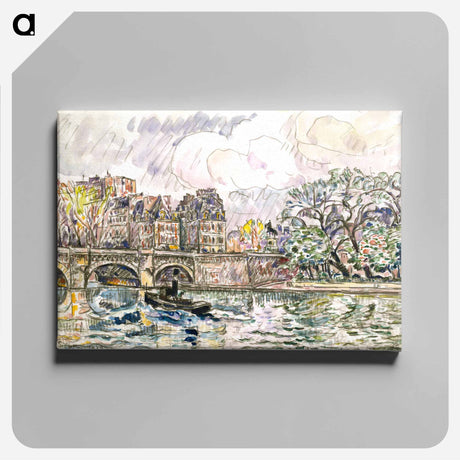
Paul Signac(ポール シニャック)
Paris: Le Place Dauphine - Paul Signac Canvas.
Sale price From ¥6,800 Regular price ¥8,800Unit price /Unavailable -

Paul Signac(ポール シニャック)
Paris: Le Place Dauphine - Paul Signac Memo.
Sale price ¥2,800 Regular price ¥3,480Unit price /Unavailable


nana_icroom様にインスタグラムでご紹介いただきました!


本日のご注文受付終了まで
時間が過ぎると翌営業日のご注文扱いとなりますのでご了承くださいませ。
