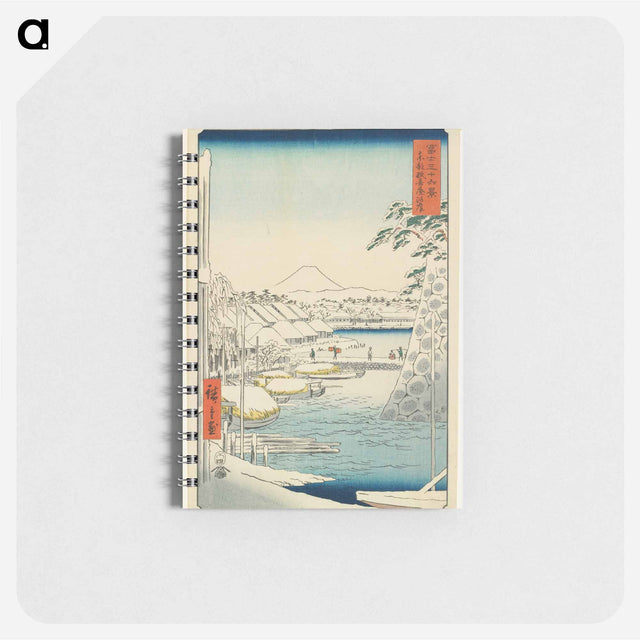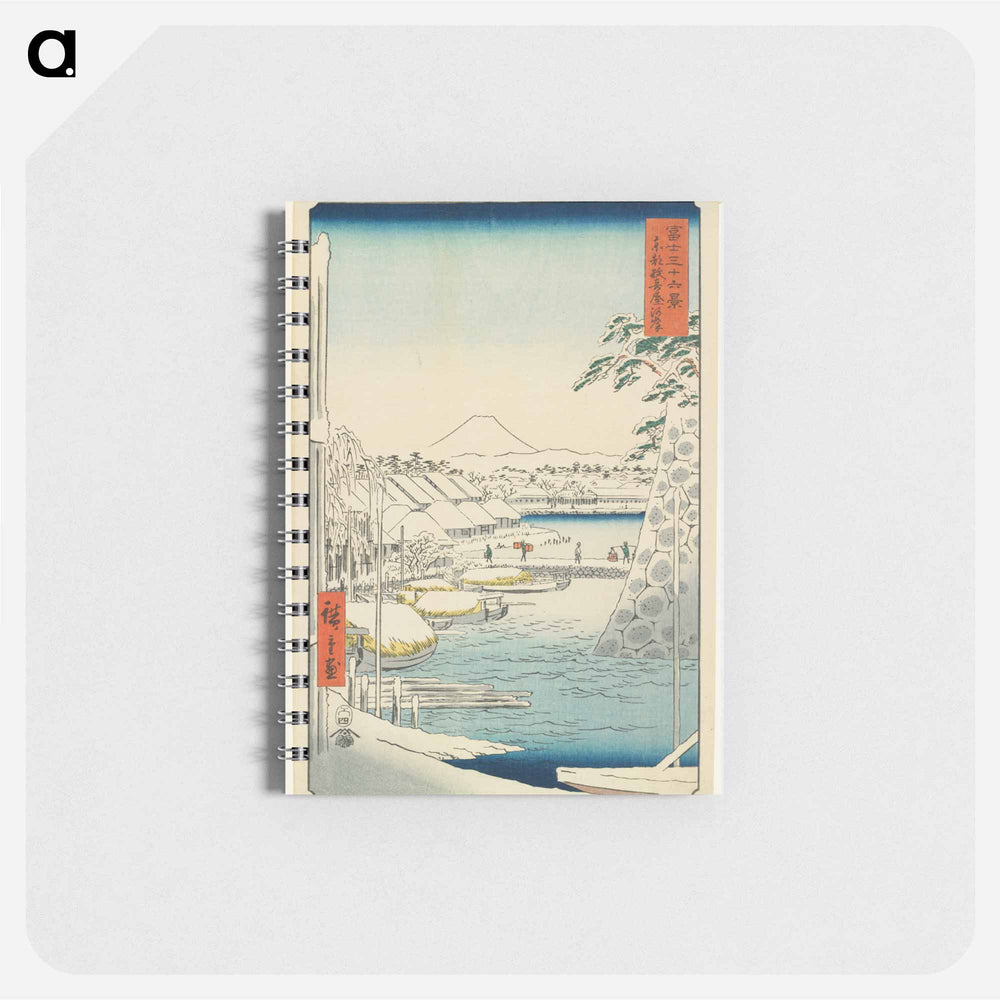
Riverbank at Sukiya in the Eastern Capital - Utagawa Hiroshige Memo.
Riverbank at Sukiya in the Eastern Capital - Utagawa Hiroshige Memo. - B6(128×182) is backordered and will ship as soon as it is back in stock.
【出荷予定について】
※土日祝定休
製品説明
製品説明
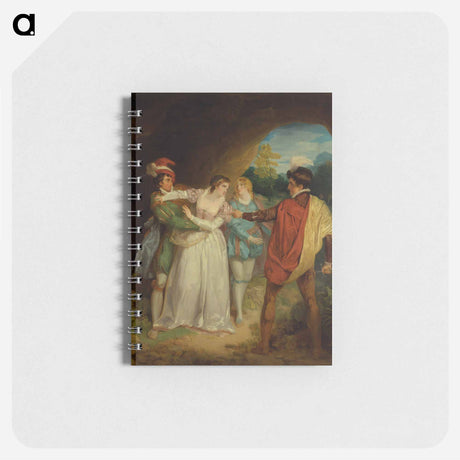
artgraph. Original masterpiece memo pad
Three features that make it a popular choice
1. Choose the size that best suits your needs
Available in B6 size, it is compact, easy to carry, and perfect for use as a memo pad.
2. Thick, smooth, high-quality paper
It uses high-quality paper that is stronger and thicker than regular notebooks. If you often write and refer back to it, like in an idea book, the bumps on the previous page won't stand out, making it easy to write on the next page.
3. A perfect gift for art-loving loved ones
The notebook section has no lines, so it's also recommended as a gift for art lovers who want to draw a little or carry a sketchbook with them!
It is printed on both sides so it can be opened either left or right.
*Due to misalignment of the printing area or changes to the trimming position, there may be missing parts in the print of the work.
- B6: 120 pages (60 sheets) / Silver ring color
| Work name | Riverbank at Sukiya in the Eastern Capital (Toto Sukiya Riverbank) |
| Author name | Utagawa Hiroshige |
| Production date | |
| Related keywords | Utagawa Hiroshige, April 1858, 19th century, art, Asia, Asian art, capital city, painting, Utagawa Hiroshige, A-I, Japan, ukiyo-e, 19th century, retro, Japanese-style art, notebook, ring notebook, memo, memo book, memo pad, ring memo, interior, stylish, painting, picture, masterpiece, landscape painting, miscellaneous goods, vintage, retro, entryway, living room, dining room, bedroom, kitchen, bathroom, entrance, etc. These reproductions are perfect for personal use, or as display reproductions in model rooms, offices, shops, hotels, cafes, etc. They also make great gifts for birthdays and other celebrations. |
| Related Keywords | utagawa hiroshige, 1858 4th month, 19th century, art, asia, asian art, at, capital, , drawing |
| Management number | 8-5 |
商品写真はできる限り実物の色に近づけるよう徹底しておりますが、 お使いのモニター設定、お部屋の照明等により実際の商品と色味が異なる場合がございます。
素材ごとに異なるニュアンスが生まれることもございますが、風合いとしてお楽しみいただければ幸いです。
About delivery
About delivery
Please allow 3 business days for posters only, and 10-14 business days for framed posters.
All other products will take approximately 10 to 14 business days.
About returned goods exchange
About returned goods exchange
Regarding returns and exchanges
We only accept returns if the product is unused, and ask that you return it within 7 days at your own expense.
If there is a problem with the product you receive, please contact us immediately within 7 days of arrival.
■ Contact details for returns and exchanges
refund
If there is a problem with the product, please see "Returns and Exchanges" above.
cancel
If the order has not yet started production, you can cancel and get a refund, but if production has already ended, you will be charged the full amount.
Riverbank at Sukiya in the Eastern Capital - Utagawa Hiroshige Memo.

Riverbank at Sukiya in the Eastern Capital - Utagawa Hiroshige Memo. - B6(128×182) is backordered and will ship as soon as it is back in stock.
You can order with confidence.
Payment methods
Please be assured that artgraph. does not store any credit card information and has no access to your credit card information.
Utagawa Hiroshige
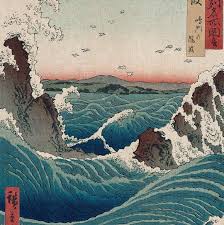
Utagawa Hiroshige was an ukiyo-e artist active in the late Edo period. Known as a " master of landscape painting ," he established his name with series such as "Fifty-three Stations of the Tokaido" and "One Hundred Famous Views of Edo." His lyrical depictions of landscapes not only fascinated people of his time, but also had a major influence on Western impressionist painters, and he is highly regarded internationally as one of Japan's leading artists.
Utagawa Hiroshige Biography
- Born in 1797 as the son of Ando Gen'emon, a regular fire brigade officer on the Yashiro River in Edo.
- In 1809, he lost his mother, and a few days later his father also died. He took over the family business and became a fire brigade officer.
- Around 1811, he became a disciple of Utagawa Toyohiro and learned ukiyo-e.
- In 1823, he handed over the family business and devoted himself to his work as a painter.
- In 1832, he began work on "The Fifty-three Stations of the Tokaido"
- In 1833, he completed "The Fifty-three Stations of the Tokaido" and established himself as a landscape painter.
- From the 1840s onwards, he produced many paintings of famous places, including "The Sixty-Nine Stations of the Kiso Kaido" and "The Eight Views of Omi."
- 1856-1858: Created his final masterpiece, "One Hundred Famous Views of Edo"
- Died in Edo on September 6, 1858 (aged 62)
Representative works
- The Fifty-three Stations of the Tokaido: Nihonbashi (1833)
- The Fifty-three Stations of the Tokaido: Kambara (1833)
- One Hundred Famous Views of Edo: Ohashi Bridge and Atake in a Sudden Shower (1857)
- One Hundred Famous Views of Edo: Plum Garden at Kameido (1857)
- Eight Views of Omi: Wild Geese Returning Home at Katata (circa 1834)
The Art of Utagawa Hiroshige
The greatest feature of Utagawa Hiroshige's art is his landscape paintings , which depict Japanese nature and the lives of its people in a poetic way. In particular, his skillful incorporation of meteorological phenomena such as rain , snow , the moon , and fog to create a sense of the seasons and the emotions of travel were unmatched. He also studied Western perspective and established his own unique style of painting, fusing bold composition with a delicate sense of color. His series of works, such as " Fifty-three Stations of the Tokaido " and " One Hundred Famous Views of Edo ," became explosively popular against the backdrop of a travel boom among the common people, and increased Hiroshige's fame. His works inspired people of the time to yearn for travel, while also helping them to rediscover the beauty of Japanese landscapes.
The influence of Utagawa Hiroshige and his later reputation
Utagawa Hiroshige's art captivated people at the time with its lyrical depictions of landscapes. His works were also introduced to the West through the popularity of Japonism , and had a major influence on impressionist and post-impressionist painters, especially Van Gogh and Monet . Today, Hiroshige is highly regarded internationally as one of the most representative ukiyo-e artists of the Edo period, alongside Katsushika Hokusai . Keywords such as " Master of Landscape Painting ," " Fifty-Three Stations of the Tokaido," "One Hundred Famous Views of Edo ," " Hiroshige in the Rain ," " Hiroshige in the Snow ," and " Hiroshige in Blue " are important elements in understanding Hiroshige's art. His works are housed in art museums around the world and continue to fascinate many people even today.
Recommend

Japanese Birds and Flowers - Utagawa Hiroshige Poster.

Nishiki-e - Utagawa Hiroshige Canvas.

Nishiki-e Woodblock Print - Utagawa Hiroshige Poster.

Revelers Returned from the Tori no Machi Festival at Asakusa, from the series One Hundred Famous Views of Edo - Utagawa Hiroshige Canvas.

Futamigaura in Ise Province - Utagawa Hiroshige Poster.

Shōno: Driving Rain - Utagawa Hiroshige Poster.

Hakone - Utagawa Hiroshige Poster.

Evening Glow at Seta - Utagawa Hiroshige Canvas.

Night View of Saruwaka-machi - Utagawa Hiroshige Canvas.

Japanese Pheasant and Chrysanthemums - Utagawa Hiroshige Poster.

Miya - Utagawa Hiroshige Canvas.

Yokkaichi - Utagawa Hiroshige Canvas.

Mitsuke. From the Series Fifty-Three Stations of the Tokaido Road - Utagawa Hiroshige Canvas.

Miya - Utagawa Hiroshige Canvas.

Rainy Street Scene - Utagawa Hiroshige Canvas.

Landscape with Temple Stairwell - Utagawa Hiroshige Canvas.

Uraga in Sagami Province - Utagawa Hiroshige Canvas.

Chiryū - Utagawa Hiroshige Canvas.

Windblown Traveler Crossing a Bridge - Utagawa Hiroshige Canvas.

Kawasaki - Utagawa Hiroshige Canvas.

Evening View of Takanawa - Utagawa Hiroshige Canvas.

Ejiri - Utagawa Hiroshige Canvas.

Työstäpaluu illalla - Utagawa Hiroshige Canvas.

Minakuchi - Utagawa Hiroshige Canvas.

Actual View of Matsushima, Ōshū Province - Utagawa Hiroshige Canvas.

Travelers Approaching a Building - Utagawa Hiroshige Canvas.

Nissan - Utagawa Hiroshige Canvas.

Kanaya - Utagawa Hiroshige Canvas.

Yawata, No. 25 - Utagawa Hiroshige Canvas.

Act VI - Utagawa Hiroshige Canvas.

Teahouse at The Fork of Yokkaichi - Utagawa Hiroshige Canvas.

Nishiki-e - Utagawa Hiroshige Canvas.

Hodogaya - Utagawa Hiroshige Canvas.

Sakurada Gate - Utagawa Hiroshige Canvas.

Flatfish Netting and Fish Boats, Wakasa Province - Utagawa Hiroshige Canvas.

Ishiyakushi - Utagawa Hiroshige Canvas.

Otsu - Utagawa Hiroshige Canvas.

Arai - Utagawa Hiroshige Canvas.

Goyu - Utagawa Hiroshige Canvas.

Kakegawa - Utagawa Hiroshige Canvas.

Maisaka: The Ferry at Imagiri - Utagawa Hiroshige Canvas.

Nihonbashi Bridge - Utagawa Hiroshige Canvas.

Hamamatsu - Utagawa Hiroshige Canvas.

Kanagawa - Utagawa Hiroshige Canvas.

Kiyomizu Temple - Utagawa Hiroshige Canvas.

Kameyama - Utagawa Hiroshige Canvas.

Ishibe, Megawa no Sato - Utagawa Hiroshige Canvas.

Shichirigahama Beach in Miya - Utagawa Hiroshige Canvas.

Harbor at Muro in Harima Province - Utagawa Hiroshige Canvas.

Yawata, No. 25 - Utagawa Hiroshige Canvas.
SNSでご紹介いただきました


関連製品
-
Utagawa Hiroshige(歌川 広重)
Riverbank at Sukiya in the Eastern Capital - Utagawa Hiroshige Poster.
Regular priceFrom ¥1,900Unit price -
-
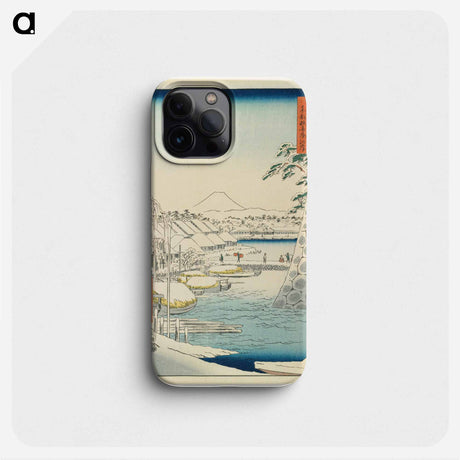
Utagawa Hiroshige(歌川 広重)
Riverbank at Sukiya in the Eastern Capital - Utagawa Hiroshige Phone Case.
Sale priceFrom ¥3,480 Regular price ¥4,280Unit price -

Utagawa Hiroshige(歌川 広重)
Riverbank at Sukiya in the Eastern Capital - Utagawa Hiroshige Canvas.
Sale priceFrom ¥6,800 Regular price ¥8,800Unit price -
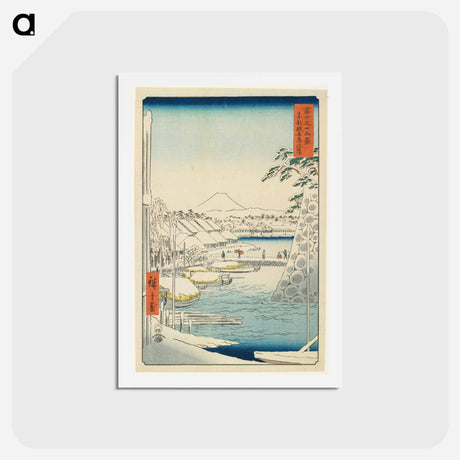
Utagawa Hiroshige(歌川 広重)
Riverbank at Sukiya in the Eastern Capital - Utagawa Hiroshige Postcard.
Sale priceFrom ¥780 Regular price ¥1,100Unit price


本日のご注文受付終了まで
時間が過ぎると翌営業日のご注文扱いとなりますのでご了承くださいませ。