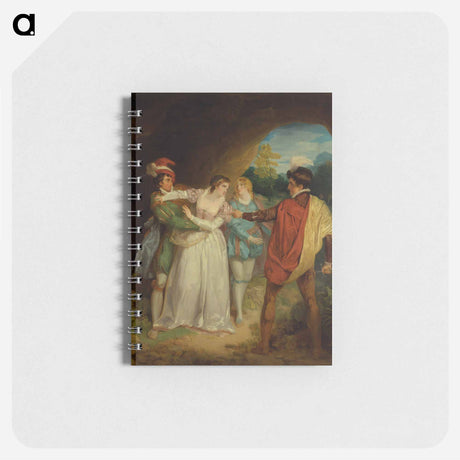
By the townwall - Caspar David Friedrich Poster.


ARを使用する
組み合わせを選んで、お部屋に試し置きできます。
【ARを使用する】
・「ARを起動」ボタンから、スマートフォンのカメラを通して実際のお部屋に試し置きが可能です。(対応機種のみ)
【画像に合わせてみる】
・用意されたお部屋の背景にポスターを配置し、サイズ感や雰囲気をシミュレーションできます。
・ポスターはドラッグで移動、右下の+−ボタンで視点の拡大縮小が可能です。


AR機能を使用するには、
スマートフォンで読み取ってください。
By the townwall - Caspar David Friedrich Poster. - A5(148×210) / none is backordered and will ship as soon as it is back in stock.
【出荷予定について】
※土日祝定休
About returned goods exchange
About returned goods exchange
Regarding returns and exchanges
We only accept returns if the product is unused, and ask that you return it within 7 days at your own expense.
If there is a problem with the product you receive, please contact us immediately within 7 days of arrival.
■ Contact details for returns and exchanges
refund
If there is a problem with the product, please see "Returns and Exchanges" above.
cancel
If the order has not yet started production, you can cancel and get a refund, but if production has already ended, you will be charged the full amount.
About delivery
About delivery
Please allow 3 business days for posters only, and 10-14 business days for framed posters.
All other products will take approximately 10 to 14 business days.
| size | Minimum margin on the short side | Minimum margin on the long side |
|---|---|---|
| A5 | 14.5mm | 25.5mm |
| A4 | 20mm | 35mm |
| A3 | 28.5mm | 49.5mm |
| A2 | 40mm | 70mm |
| A1 | 50mm | 90mm |
| B5 | 17.5mm | 30.5mm |
| B4 | 24.5mm | 43.5mm |
| B3 | 35mm | 61mm |
| B2 | 45mm | 80mm |
| B1 | 64mm | 114mm |
*The above figures are the minimum margin widths.
Depending on the proportions of the work, such as long and narrow works, there may be more margins than those listed above.
If you would like to know the exact size in advance, please contact us here .
お届けについて
お届けについて
出荷までの期間はポスターのみは3営業日、額装込み・キャンバス製品は10営業日程度いただいております。
それ以外の製品は10〜14営業日程度いただいております。
営業日:月〜金曜
定休日 : 土・日曜日・祝日
※サイズ・色・点数によってお届けに通常より長くお時間をいただく場合がございます。お急ぎの場合や複数点数のご購入をご検討の場合は事前にお問い合わせください。
返金・交換について
返金・交換について
返金・交換に関して
到着した製品に不具合がございましたら到着より7日以内に速やかにご連絡ください。
■返品・交換などの連絡先
info@artgraph.jp
返金
商品に不具合が有った場合は上記「返金・交換」をご覧下さい。
キャンセル
生産開始前であればキャンセル・返金可能ですが、生産が終了している場合は全額ご請求とさせていただきます
詳しくはこちら

By the townwall - Caspar David Friedrich Poster.

By the townwall - Caspar David Friedrich Poster. - A5(148×210) / none is backordered and will ship as soon as it is back in stock.
You can order with confidence.
Payment methods
Please be assured that artgraph. does not store any credit card information and has no access to your credit card information.
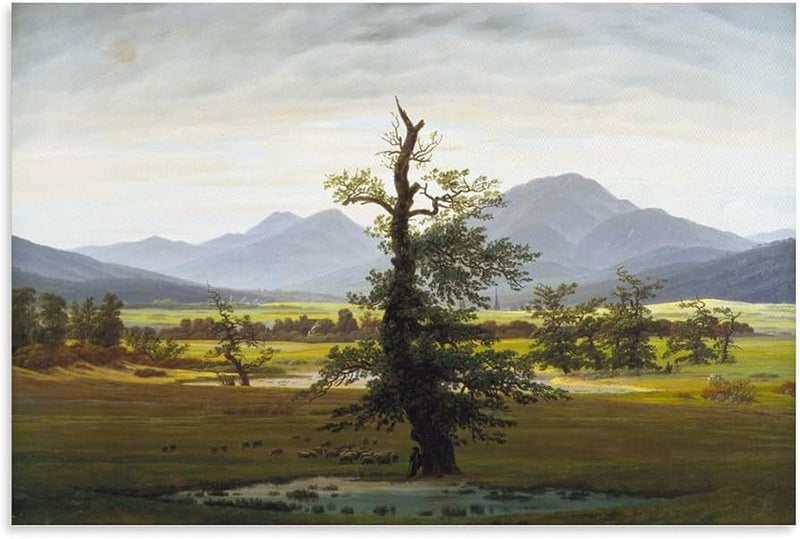
Caspar David Friedrich
Caspar David Friedrich
Caspar David Friedrich is a representative painter of 19th-century German Romanticism. He is known for his works that project human spirituality, religious sentiment, and feelings of loneliness into majestic and mystical natural landscapes, and he elevated landscape painting to new heights.
Caspar David Friedrich Biography
-
He was born on September 5, 1774 in Greifswald, a port town on the Baltic Sea coast that was then part of Sweden.
-
In 1794 he entered the Royal Academy of Fine Arts in Copenhagen, where he studied for four years.
-
In 1798 he moved to Dresden, which was one of the centers of German art at the time, and remained there for the rest of his life.
-
In 1808, he produced The Cross in the Mountains (Tetchen Altarpiece), which sparked a fierce debate over tradition (the Lampach controversy) by depicting a landscape as an altarpiece.
-
In 1810, his fame grew when the Crown Prince of Prussia (later Frederick William IV) purchased his work, and he became a member of the Berlin Academy.
-
He married Caroline Bommer in 1818. During this time he produced his masterpieces, including "The Wanderer Above the Sea of Clouds."
-
After around 1825, with the rise of late Romanticism and his style no longer matching the tastes of the time, he was gradually forgotten by the public.
-
In 1835 he suffered a stroke, which made it difficult for him to continue his creative activities.
-
He died in poverty and obscurity in Dresden on May 7, 1840 (aged 65).
Representative works
-
The Cross in the Mountains (Tetchen Altarpiece) (1808)
-
Abbey in an Oak Forest (1809-10)
-
Monk on the Seashore (1809-10)
-
"Wanderer Above the Sea of Clouds" (c. 1818)
-
The Sea of Ice (1823-24)
-
The Stages of Life (c. 1835)
The core of Friedrich's art is his view of nature itself as a place of divine revelation, and his depiction of the inner world of humans through magnificent landscapes. The figures seen from behind (Rückenfigur), which frequently appear in his works, invite the viewer into the pictorial space and have the effect of reliving the landscape that the figures are gazing at.
Motifs such as fog, sunsets, the moon, ruins, and decaying trees symbolize Romantic themes such as death, infinity, longing, and transience. His strict, nearly symmetrical compositions and the expression of tranquil, clear light give his paintings a religiously solemn and deeply spiritual quality. Although highly acclaimed during his lifetime, he was long forgotten after his death. However, he was rediscovered by Surrealist and Symbolist painters in the early 20th century, and today he is considered one of the most important painters in the history of German art.
Recommend

Chalk Cliffs on Rügen - Caspar David Friedrich Canvas.

The Wanderer Above the Sea of Fog - Caspar David Friedrich Phone Case.

View from the Artists Studio, Window on Left - Caspar David Friedrich Memo.

Woman in a Cloak - Caspar David Friedrich Memo.

West facade of the ruins of Eldena - Caspar David Friedrich Memo.

Coffin and Grave - Caspar David Friedrich Memo.

Luise Sponholz - Caspar David Friedrich Memo.

Caroline Sponholz - Caspar David Friedrich Memo.

Basel - Caspar David Friedrich Memo.

Landscape with a male figure - Caspar David Friedrich Memo.

Sailing ship - Caspar David Friedrich Memo.

Ruined Monastery of Eldena near Greifswald - Caspar David Friedrich Memo.

The Noon - Caspar David Friedrich Memo.

Landscape with Mountain Lake Morning - Caspar David Friedrich Memo.

Hunter in the Forest - Caspar David Friedrich Memo.

Mountain Peak with Drifting Clouds - Caspar David Friedrich Memo.

Reefs by the Seashore - Caspar David Friedrich Memo.

Landscape with the Rosenberg in the Bohemian Mountains - Caspar David Friedrich Memo.

Ancient Oak Tree with a Stork's Nest - Caspar David Friedrich Memo.

Doorway in Meissen - Caspar David Friedrich Memo.

Statue of the Madonna in the Mountains - Caspar David Friedrich Memo.

Plowed Field - Caspar David Friedrich Memo.

August Bridge in Dresden - Caspar David Friedrich Memo.

View of Schmiedebergerkamm - Caspar David Friedrich Memo.

Moonrise on the Sea - Caspar David Friedrich Memo.

New Moon Above the Riesengebirge Mountains - Caspar David Friedrich Memo.

Eastern Coast of Ruegen Island with Shepherd - Caspar David Friedrich Memo.

Summer - Caspar David Friedrich Memo.

The dreamer - Caspar David Friedrich Memo.

Boat on the Shore. Moonrise - Caspar David Friedrich Memo.

Megalithic grave - Caspar David Friedrich Memo.

A Walk at Dusk (with Tumulus) - Caspar David Friedrich Memo.

Owl on a grave - Caspar David Friedrich Memo.

Evening Landscape with Two Men - Caspar David Friedrich Memo.

Peaks with clouds - Caspar David Friedrich Memo.

Riesengebirge - Caspar David Friedrich Memo.

The Riesengebirge - Caspar David Friedrich Memo.

Forrest in the end of autumn - Caspar David Friedrich Memo.

Landscape with the Rosenberg in Bohemian Switzerland - Caspar David Friedrich Memo.

Mountain Peak with Drifting Clouds - Caspar David Friedrich Memo.

Easter Morning - Caspar David Friedrich Memo.

The Stages of Life - Caspar David Friedrich Memo.

Flat country shank at Bay of Greifswald - Caspar David Friedrich Memo.

Rest at the Hay Harvest - Caspar David Friedrich Memo.

Ruin of Eldena in the Giant Mountains - Caspar David Friedrich Memo.

Largeness - Caspar David Friedrich Memo.

Swans among the reeds at the first Morgenro - Caspar David Friedrich Memo.

The Grosse Gehege near Dresden - Caspar David Friedrich Memo.

Evening on the Baltic Sea - Caspar David Friedrich Memo.

Plowed field - Caspar David Friedrich Memo.
SNSでご紹介いただきました


同じ作品を使用したアイテム
-

Caspar David Friedrich(カスパー ダーヴィト フリードリヒ)
By the townwall - Caspar David Friedrich Phone Case.
Sale priceFrom ¥3,480 Regular price ¥4,280Unit price -

Caspar David Friedrich(カスパー ダーヴィト フリードリヒ)
By the townwall - Caspar David Friedrich Canvas.
Sale price ¥6,800 Regular price ¥8,800Unit price -

Caspar David Friedrich(カスパー ダーヴィト フリードリヒ)
By the townwall - Caspar David Friedrich Memo.
Sale price ¥2,800 Regular price ¥3,480Unit price -

Caspar David Friedrich(カスパー ダーヴィト フリードリヒ)
By the townwall - Caspar David Friedrich Postcard.
Sale priceFrom ¥780 Regular price ¥1,100Unit price





Until today's order deadline
Please note that if you exceed this time your order will be processed on the next business day.
art posterをさらに見る
View all
-
ベストセラー
-
-
ベストセラー
-
-
ベストセラー
Claude Monet(クロード モネ)
Landscape: The Parc Monceau - Claude Monet Poster.
Regular priceFrom ¥1,900Unit price -
-
ベストセラー
-
-
ベストセラー
Vincent van Gogh(フィンセント ファン ゴッホ)
Almond blossom - Vincent van Gogh Poster.
Regular priceFrom ¥1,900Unit price -
-
ベストセラー
-
-
ベストセラー
Vincent van Gogh(フィンセント ファン ゴッホ)
The Starry Night - Vincent van Gogh Poster.
Regular priceFrom ¥1,900Unit price -
-
ベストセラー
-