


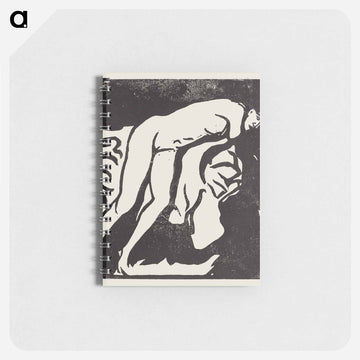
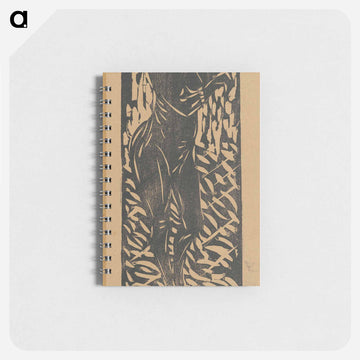
Two Peasant Heads - Ernst Ludwig Kirchner Memo.
Two Peasant Heads - Ernst Ludwig Kirchner Memo. - B6(128×182) is backordered and will ship as soon as it is back in stock.
【出荷予定について】
※土日祝定休
Product Description
Product Description
artgraph. Original masterpiece memo pad
Three features that make it a popular choice
1. Choose the size that best suits your needs
Available in B6 size, it is compact, easy to carry, and perfect for use as a memo pad.
2. Thick, smooth, high-quality paper
It uses high-quality paper that is stronger and thicker than regular notebooks. If you often write and refer back to it, like in an idea book, the bumps on the previous page won't stand out, making it easy to write on the next page.
3. A perfect gift for art-loving loved ones
The notebook section has no lines, so it's also recommended as a gift for art lovers who want to draw a little or carry a sketchbook with them!
It is printed on both sides so it can be opened either left or right.
*Due to misalignment of the printing area or changes to the trimming position, there may be missing parts in the print of the work.
- B6: 120 pages (60 sheets) / Silver ring color
| Work name | Two Peasant Heads |
| Author name | Ernst Ludwig Kirchner |
| Production date | 1920 |
| Related keywords | Ernst Ludwig Kirchner art, artwork, prints, vintage, Ernst Ludwig Kirchner, A-I, German, Expressionism, 20th century, modern, simple, art, notebook, spiral notebook, memo, memo book, memo pad, spiral memo, interior, stylish, painting, picture, masterpiece, landscape, scenery, miscellaneous goods, vintage, retro, entryway, living room, dining room, bedroom, kitchen, bathroom, entrance, etc. Use it for yourself, or as a display reproduction for model rooms, offices, shops, hotels, cafes, etc. Use it as a birthday present or gift. |
| Related Keywords | ernst ludwig kirchner, art, artworks, , prints, vintage |
| Management number | 3-56 |
We strive to make our product photos as close to the actual colors as possible, but the colors may differ from the actual product depending on your monitor settings and room lighting.
Each material may have different nuances, but we hope you enjoy the texture.
About delivery
About delivery
Please allow 3 business days for posters only and 10 business days for framed or canvas products.
Other products will take approximately 10 to 14 business days.
Business days: Monday to Friday Closed: Saturday, Sunday and public holidays
*Delivery may take longer than usual depending on the size, color, and quantity. If you are in a hurry or considering purchasing multiple items, please contact us in advance.
Refunds and Exchanges
Refunds and Exchanges
Refunds and Exchanges
If there is a problem with the product you received, please contact us immediately within 7 days of receiving it.
■ Contact details for returns and exchanges
info@artgraph.jp
refund
If there is a problem with the product, please see "Refunds and Exchanges" above.
cancel
Cancellation and refunds are possible before production has started, but if production has already ended, we will charge you the full amount.
Learn more

Two Peasant Heads - Ernst Ludwig Kirchner Memo.
You can order with confidence.
Payment methods
Please be assured that artgraph. does not store any credit card information and has no access to your credit card information.

Ernst Ludwig Kirchner
Ernst Ludwig Kirchner is a German Expressionist painter who was prominent in the early 20th century. He is known for his works that use intense colors and distorted forms to express human loneliness and anxiety, as well as criticism of society.
Biography of Ernst Ludwig Kirchner
- Born on May 6, 1880 in Aschaffenburg, Kingdom of Bavaria, German Empire.
- From 1901 to 1905 he studied architecture at the Dresden University of Technology.
- In 1905, he founded the artist group "Die Brücke" ("The Bridge") in Dresden, and became a central figure in the Expressionist movement.
- He moved to Berlin in 1911. He produced many works that dealt with the themes of the hustle and bustle and loneliness of city life.
- During World War I, he enlisted in the army but suffered a nervous breakdown and was discharged. He spent his time recovering in Davos, Switzerland.
- In 1933, the Nazi regime branded him a "degenerate artist" and removed his works from museums.
- In 1937, many of his works were exhibited at the "Degenerate Art" exhibition in Munich.
- On June 15, 1938, he committed suicide by shooting himself in Davos, Switzerland (aged 58).
Representative works
- "Berlin Street" (1913)
- Five Women (1913)
- "Marcella" (1909/10)
- Self-Portrait (1915)
- Nudes in the Forest (1910)
Kirchner's works sharply express the hustle and bustle of the city, its loneliness, and human feelings of alienation and anxiety . He portrays human emotions and inner conflicts through distorted and deformed forms, rough brushstrokes, and intense colors .
After World War I, Kirchner continued to create while recuperating in Switzerland, but he suffered from neurosis and became increasingly lonely and anxious. In his later years, his works became more introverted and symbolic in nature.
With its powerful expression and deep depiction of the human psyche, Kirchner's work not only represents German Expressionism, but also had a major influence on 20th century art as a whole.












Related Products
-
Ernst Ludwig Kirchner(エルンスト ルートヴィヒ キルヒナー)
Two Peasant Heads - Ernst Ludwig Kirchner Poster.
Sale price From ¥1,800 Regular price ¥2,280Unit price /Unavailable -
-

Ernst Ludwig Kirchner(エルンスト ルートヴィヒ キルヒナー)
Two Peasant Heads - Ernst Ludwig Kirchner Phone Case.
Sale price From ¥3,480 Regular price ¥4,280Unit price /Unavailable


Until today's order deadline
Please note that if you exceed this time your order will be processed on the next business day.
